
Have you ever wondered how businesses manage to run seamless international phone systems without spending a fortune on traditional phone lines? That’s where sip trunk steps in ,a smart, flexible, and cost-effective way to handle calls in today’s digital world.
If you’ve ever been frustrated by dropped calls, expensive international rates, or limited phone line capacity, then sip trunk trunking might be exactly what you need. It’s one of those technologies that sounds complicated but, once you understand it, you’ll see how it can completely transform your communication setup.
In this article, you’ll learn what a SIP trunk is, how it works, and why so many businesses, from startups to global corporations ,are switching to it. We’ll also break down its pros, cons, setup process, and what you should look for in a SIP provider. By the end, you’ll know exactly whether sip trunk is the right move for you.
What Is a SIP Trunk?
Let’s start with the basics.
SIP stands for Session Initiation Protocol, and a trunk is basically a “bundle” of phone lines. So, a SIP trunk is a virtual phone line that uses the internet instead of traditional copper wires to make and receive calls.
Think of it as the modern version of a business phone line, but instead of relying on physical telephone networks, it routes your voice calls through the internet using VoIP (Voice over Internet Protocol) technology.
Here’s a quick example:
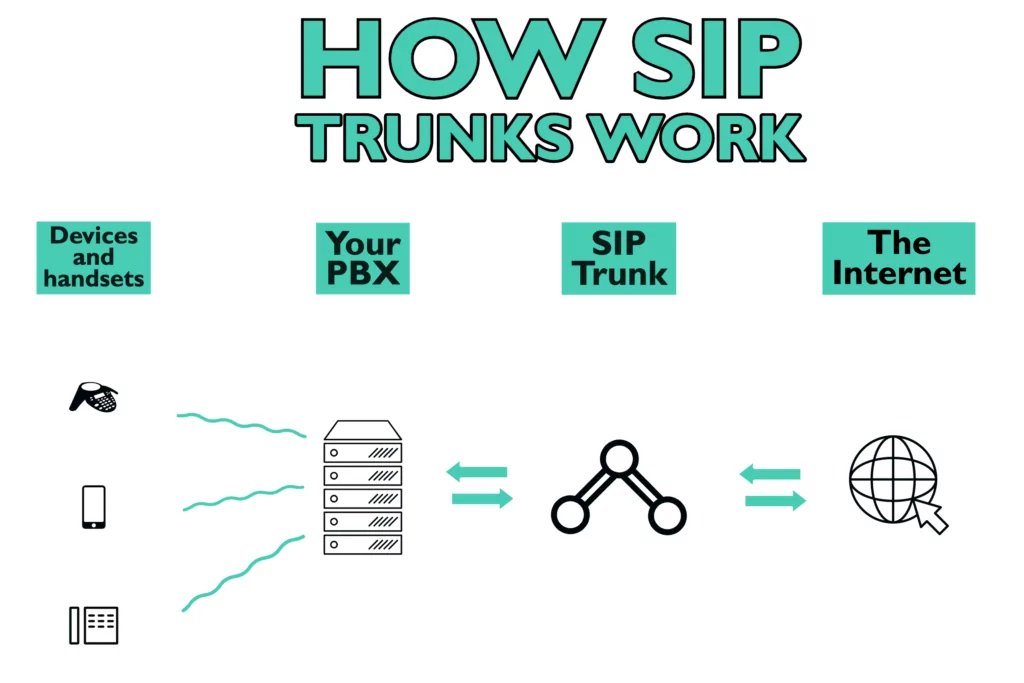
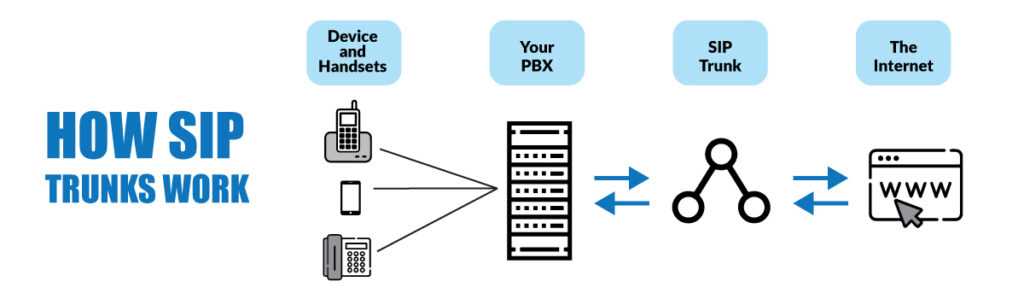
When you call someone using your office phone or a softphone app, your SIP trunk connects that call to your company’s private branch exchange (PBX), which then routes it to the other person’s phone, all via the internet.
That’s why SIP trunks are so powerful:
They eliminate the need for traditional phone lines while giving you all the same functionality (and more).
How sip trunk Trunking Works, Explained Simply
SIP trunking might sound technical, but it’s actually easy to picture once you break it down into steps.
- You make a call from your phone or VoIP app.
- The SIP trunk sends the call through your company’s PBX system.
- The PBX connects to the internet-based SIP provider.
- The provider routes your call to the other party,anywhere in the world.
It’s that simple. No bulky cables, no expensive hardware, and no limit to the number of simultaneous calls you can handle.
With SIP trunking, all you need is:
- A reliable internet connection,
- A compatible PBX system (usually IP-PBX),
- And a SIP provider that connects your system to the public telephone network.
Why Businesses Are Switching to sip trunk
In the past decade, SIP trunking has gone from being a niche IT concept to a mainstream communication solution.
Here are some of the biggest reasons why:
1. Huge Cost Savings
Traditional phone lines are expensive, especially for long-distance or international calls. SIP trunks dramatically reduce these costs by using the internet to transmit calls.
Many businesses report saving up to 60% on their monthly phone bills after switching. You also save on maintenance because there’s no physical infrastructure to repair or upgrade.
2. Unlimited Scalability
With old analog systems, adding more phone lines meant more cables, hardware, and headaches. SIP trunking lets you add or remove lines with just a few clicks, ideal for growing businesses or those with seasonal demand.
3. Better Call Quality
Modern SIP technology delivers crystal-clear audio, often better than traditional PSTN (Public Switched Telephone Network) lines, as long as your internet connection is strong.
4. Business Continuity
If your office internet goes down or you move locations, SIP trunks make it easy to reroute calls automatically to mobile phones or other offices. That means no missed calls , ever.
5. Integration with Modern Tools
sip trunk trunking isn’t just for phones. You can integrate it with:
- Video conferencing platforms
- CRM software (like Salesforce or HubSpot)
- Team chat tools (like Microsoft Teams or Slack)
This flexibility helps unify your communication in one place.
SIP Trunk vs. Traditional Phone Lines
Here’s a quick comparison table to show how much better sip trunk trunking performs:
| Feature | SIP Trunk | Traditional Phone Lines |
|---|---|---|
| Setup Cost | Low | High |
| Call Quality | HD | Standard |
| Scalability | Instant | Manual |
| Mobility | High (works anywhere) | None |
| Maintenance | Minimal | Ongoing |
| Disaster Recovery | Automatic rerouting | Manual backup |
Clearly, SIP trunks win in almost every category.
How to Set Up sip trunk for Your Business
Setting up SIP trunking is easier than you might think. Here’s a step-by-step guide:
- Evaluate your current system:
Check whether your phone system supports VoIP or if you need an upgrade to an IP-PBX. - Choose a reliable sip trunk provider:
Look for uptime guarantees, global coverage, and strong customer support. - Check your internet connection:
You’ll need stable bandwidth , about 100 Kbps per call is a good rule of thumb. - Configure your PBX:
Your IT team or provider will configure SIP credentials, codecs, and routing rules. - Test and train your team:
Make test calls, check call quality, and train employees on using softphones and extensions.
Once set up, you’ll be amazed how quickly you can scale or modify your communication structure.
Top Benefits of SIP Trunking
Let’s dive deeper into what makes SIP trunking such a game-changer.
1. Global Reach with Local Numbers
You can have local numbers in multiple countries, allowing your business to expand globally while staying accessible to customers everywhere.
2. Remote Work Support
SIP works perfectly for hybrid and remote teams. Employees can use the same number from any device — phone, tablet, or laptop, as long as they have an internet connection.
3. Security and Reliability
Modern SIP providers use encryption protocols (TLS, SRTP) and redundant data centers to protect your communication and ensure 99.99% uptime.
4. Analytics and Reporting
SIP trunks give you detailed call reports , helping you analyze call duration, missed calls, and performance.
Potential Downsides (and How to Avoid Them)
No technology is perfect, and SIP trunking is no exception. Here’s what to watch out for:
- Dependence on internet quality:
Poor internet means poor call quality. Always invest in a strong, stable connection. - Initial configuration complexity:
Some setup steps can be technical. A trusted provider can help with this. - Power outages:
If your power goes out, your SIP service might too ,unless you have a backup plan (like mobile failover).
Future of SIP Trunking
SIP trunking isn’t just a trend, it’s the backbone of the future of communication.
With the growth of cloud-based PBX, AI-driven analytics, and 5G, SIP trunks will only get faster, smarter, and more secure.
Soon, voice, video, and messaging will merge into a single, unified experience powered by sip trunk.
Conclusion
SIP trunking is transforming the way businesses communicate.
It’s reliable, scalable, and affordable, making it a must-have for modern companies that value flexibility and efficiency.
If you’re ready to cut costs, improve call quality, and future-proof your communication, SIP trunking is the upgrade your business deserves.
FAQs
1. What is a SIP trunk used for?
A SIP trunk connects your phone system to the internet, allowing you to make and receive calls using VoIP instead of traditional phone lines.
2. How many SIP trunks do I need?
It depends on how many concurrent calls your business makes. Most companies start with 1–2 channels per employee.
3. Is SIP trunking secure?
Yes, with proper encryption and a trusted provider, SIP trunking is very secure.
4. Can I use SIP trunks with Microsoft Teams or Zoom?
Absolutely. Many SIP providers integrate directly with collaboration tools like Teams, Zoom, and Slack.
5. How much does SIP trunking cost?
On average, between $10–$25 per trunk per month — far less than traditional phone systems.
6. Do I need new hardware for SIP trunking?
If you already have a VoIP-compatible PBX, you’re good to go. Otherwise, you might need an upgrade to an IP-PBX.
7. What happens if my internet goes down?
You can set up automatic call rerouting to mobile phones or other branches, ensuring you never miss a call.
8. Can small businesses use SIP trunking?
Yes! It’s ideal for startups and small businesses because it’s affordable and scalable.
9. What’s the difference between sip trunk and VoIP?
VoIP is the technology for voice calls over the internet, while SIP is the protocol that enables and manages those calls.
10. Is SIP trunking worth it?
Definitely. It lowers costs, boosts flexibility, and prepares your business for the digital future.
